magine a match that ends not with a whistle after 90-plus minutes of ebb and flow。but with a buzzer after exactly 60 minutes of pure, unbroken action. That's the proposal gaining traction among some of football's most influential rule-makers. The idea is simple: reduce playing time to 60 minutes, divided into two 30-minute halves, with the clock stopped whenever the ball is out of play. No more stoppage time. No more time-wasting theatrics. Just 60 minutes of actual football.The motivation is clear. Studies across major European leagues show that the ball is in play for only 55 to 60 minutes on average during a standard 90-minute match. The rest is lost to throw-ins, free kicks, substitutions, injuries。and the interminable goal-kick routines. This discrepancy frustrates fans, broadcasters, and even players. A 60-minute clock would guarantee value for every minute, aligning the sport with other timed sports like basketball and rugby, where the clock stops when play halts. I remember watching a Premier League game last season where the fourth official signaled six minutes of added time, and the ball was in play for maybe two of them. That's not entertainment;that's a test of patience.But tradition runs deep. Football's 90-minute format has been sacred since the late 19th century。and any change to the clock invites fierce resistance. Purists argue that the ebb and flow of a match—the momentum shifts, the tactical fouling, the strategic time-wasting—are part of the game's fabric. They point to the drama of a last-minute winner in the 94th minute, a moment that would vanish from a 60-minute match. Yet the counterargument is compelling: those moments are increasingly manufactured by stoppage-time calculations that vary wildly between referees. A fixed 60-minute clock would eliminate that inconsistency. It would also reduce the physical toll on players, who currently cover similar distances in 90 minutes of real time but with more stops and starts. The average player sprints less in a 60-minute effective game, potentially extending careers.
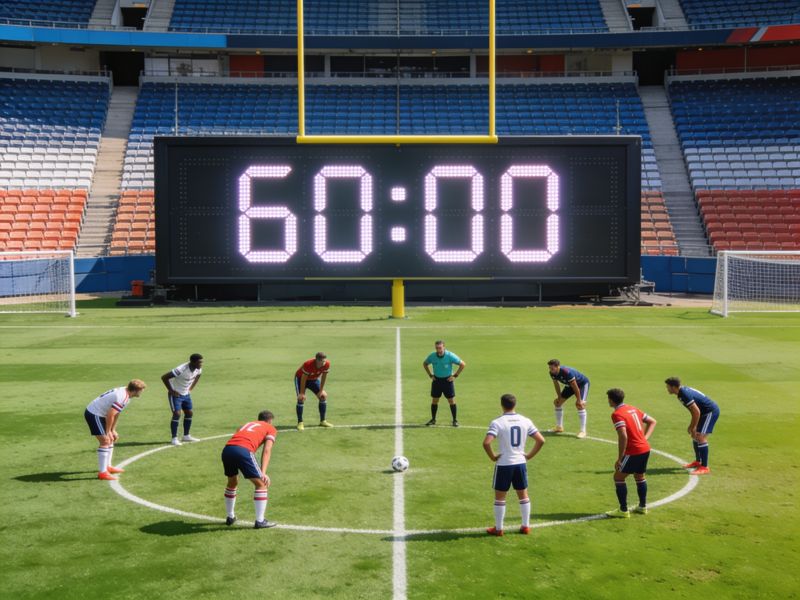
What would a 60-minute match actually look like?Coaches would need to rethink substitutions—three windows might become five, or unlimited roll-on-roll-off changes could enter the conversation. Tactics would shift: high-pressing teams would have less time to recover, but so would defensive blocks. The concept of "game management" would change entirely. No more running the ball into the corner flag in the 85th minute;
every second counts. Broadcasters would love it, too—a guaranteed two-hour window with no unpredictable overruns. I can already hear the advertising executives cheering. But there's a risk: the 60-minute format might reduce the epic feel of marathon matches, the ones that stretch into extra time and penalties. Those nights are rare。though. Most matches don't need 90 minutes to tell their story.The debate is far from settled. FIFA and IFAB have shown willingness to experiment with rule changes, from the five-substitution rule to the semi-automated offside technology. A 60-minute trial in lower leagues or youth tournaments seems plausible within the next few years. My hunch is that we'll see it tested in a competitive setting before 2030. Football may become 60 minutes, but it won't happen overnight. The sport's conservatism is both a strength and a weakness. For now, fans can only watch the clock tick down—knowing that every minute of actual play is a minor miracle。and every minute of delay a small theft. The question is whether the guardians of the game will finally decide that 60 minutes of real football beats 90 minutes of illusion.