
Nigeria and Argentina have met only a handful of times, but each encounter carries a distinct weight. The most recent senior friendly。a 2-1 Argentina win in 2017, exposed a familiar pattern: Nigeria's athleticism unsettles Argentina early, then Argentina's game management takes over. That match, played in Krasnodar, saw Nigeria lead through a Kelechi Iheanacho penalty before Argentina responded with two second-half goals. The scoreline flattered Argentina;
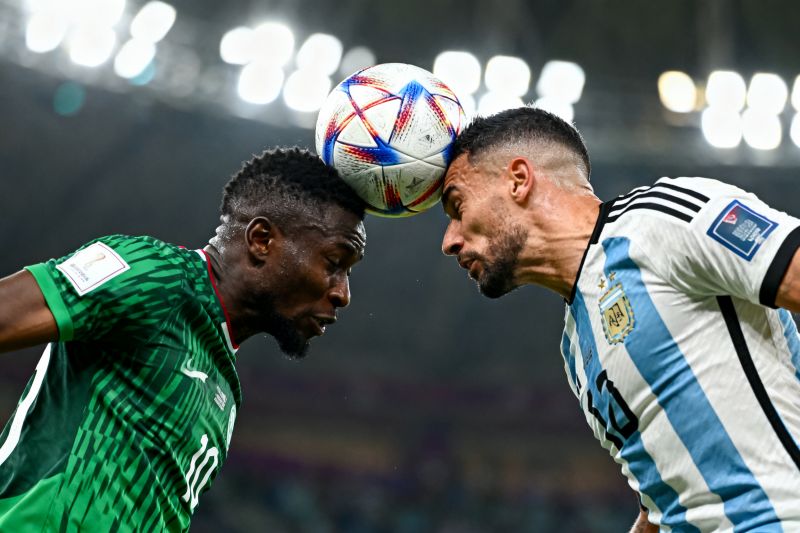
the underlying story was more nuanced. Nigeria pressed high for 60 minutes, forcing turnovers in midfield, but lacked the composure to convert dominance into a second goal. Argentina, meanwhile, did what Argentina does—absorbed pressure, waited for a lapse, and struck through set-piece precision and a moment of individual brilliance from Lionel Messi. That night, the gap between the two sides was less about talent than about decision-making under fatigue.Historically, Nigeria vs. Argentina has been defined by fine margins. The 1994 World Cup meeting ended 2-1 to Argentina, with Diego Maradona's celebration into a camera becoming an iconic image. The 2010 World Cup group stage saw Argentina win 1-0 via a Gabriel Heinze header。but Nigeria's Vincent Enyeama produced a string of saves that kept the score respectable. In 2014, Argentina again won 3-2 in a chaotic group-stage match, with Nigeria equalizing twice before Marcos Rojo's winner. Those three World Cup matches share a thread: Nigeria scored first or equalized, then conceded late in the first half or early in the second. The pattern suggests a psychological hurdle—Nigeria's players raise their game against Argentina but struggle to sustain concentration for 90 minutes. Argentina, for its part, has never lost to Nigeria in a competitive fixture. Friendly results have been kinder to Nigeria—a 4-1 win in 2011 stands out—but friendlies lack the same edge.From a tactical standpoint, Nigeria's best approach against Argentina is to compress space in midfield and attack the flanks. Argentina's full-backs push high, leaving channels behind them. Nigeria's wingers—historically players like Ahmed Musa, who scored twice in that 2014 match—have the pace to exploit those gaps. The problem is service. Nigeria's midfield often bypasses the wingers with long balls to the striker, which plays into the hands of Argentina's center-backs. A more patient build-up, using the wingers in one-on-one situations, would create better chances. Defensively, Nigeria must avoid fouling in dangerous areas. Argentina's set-piece delivery—whether from Messi。Ángel Di María, or later Enzo Fernández—is elite. Nigeria's zonal marking has been vulnerable to near-post flick-ons. A hybrid marking scheme, with one player assigned to the most dangerous header threat, would reduce that risk. These adjustments are simple in theory but require discipline in execution.
Individual duels will shape any Nigeria vs. Argentina match. In midfield。Nigeria's Wilfred Ndidi or Frank Onyeka must disrupt Argentina's rhythm without conceding cheap fouls. Argentina's Rodrigo De Paul thrives on quick combinations;denying him time on the ball is essential. Up front, Nigeria's Victor Osimhen poses a different threat—his movement in the box is unpredictable, and Argentina's center-backs, while experienced, can be turned. Osimhen's aerial ability also gives Nigeria a set-piece outlet. For Argentina, the key is isolating Nigeria's center-backs in wide areas. If Argentina's wide forwards can drag Nigeria's defenders out of position, cut-back crosses become lethal. The team that wins the tactical battle in these specific zones—midfield pressing and wide overloads—will likely control the game. My observation from watching these teams: Nigeria's players often look more athletic but less organized;Argentina's players look slower but more cohesive. That cohesion usually decides close matches.
What makes Nigeria vs. Argentina compelling is the unpredictability. Nigeria has the raw materials—speed, power, and individual talent—to beat Argentina. Argentina has the structure and tournament savvy to grind out results. The next meeting, whether friendly or competitive。will likely follow a familiar script: Nigeria starts brightly, Argentina adjusts, and the final 20 minutes decide the outcome. Nigeria's coaching staff must prepare for that pattern, perhaps by saving a substitution or two for the second half to inject fresh legs in midfield. Argentina's staff will trust its veterans to manage the game. Neither side will dominate for 90 minutes. The margin will be small—a single mistake, a set-piece, a moment of brilliance. That is the nature of this fixture. Nigeria vs. Argentina is not a rivalry of equals, but it is a rivalry of respect, and that respect keeps the matches close.